Horseshoe crabs are an ancient and unique group of marine arthropods that have been around for over 450 million years. Over the course of their long history, they have survived multiple extinction level events, including the end-Permian extinction and the end-Cretaceous extinction. The fact that horseshoe crabs have been able to survive these catastrophic events is a testament to their remarkable adaptability and resilience as a species.
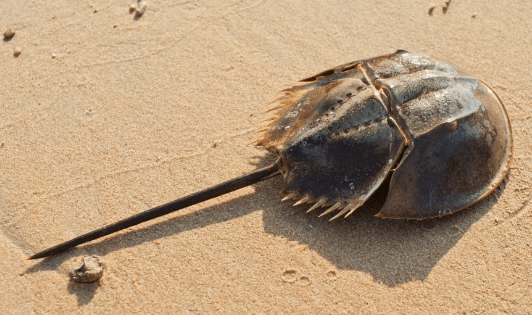
One of the key factors that has allowed horseshoe crabs to survive over the millennia is their unique reproductive strategy. Unlike most animals, horseshoe crabs lay their eggs on the beach, where they are exposed to a variety of environmental stresses such as temperature fluctuations, predation, and desiccation. However, horseshoe crabs have evolved a number of adaptations that allow them to protect their eggs and ensure their survival.
For example, horseshoe crabs produce a special type of “clotting” protein in their blood that helps to seal their eggs and prevent them from drying out. They also bury their eggs in the sand to protect them from predators and to provide a stable environment for development. Additionally, horseshoe crabs have a long breeding season that spans from late spring to early autumn, which allows them to lay multiple clutches of eggs throughout the year and increases the chances that some of them will survive.
Another key factor that has contributed to the survival of horseshoe crabs is their ability to adapt to changing environmental conditions. Over the course of their long history, horseshoe crabs have lived through multiple periods of climatic and ecological change, and they have been able to adapt to these changes by altering their behavior, morphology, and physiology. For example, horseshoe crabs have evolved a number of adaptations that allow them to survive in low-oxygen environments, which may have been important during times of low atmospheric oxygen levels.
In addition, horseshoe crabs have been able to survive by forming symbiotic relationships with other organisms. For example, horseshoe crabs have a special type of bacteria that lives on their exoskeleton and helps to protect them from harmful microbes. They also have a unique relationship with migratory shorebirds, which rely on horseshoe crab eggs as a critical food source during their long migrations.
In conclusion, the survival of horseshoe crabs over millions of years is a testament to their remarkable adaptability and resilience as a species. By evolving unique reproductive strategies, adapting to changing environmental conditions, and forming symbiotic relationships with other organisms, horseshoe crabs have been able to survive multiple extinction level events and continue to thrive to this day. However, it is important to recognize that horseshoe crabs, like many other species, face significant challenges from human activities such as habitat loss, overfishing, and climate change. Protecting and preserving these ancient and important creatures is essential for the health of our planet and the biodiversity of our oceans.



 The Daily Think
Leave a comment