“The only thing worse than being talked about, is not being talked about.” – Oscar Wilde.
Corporations have done everything they can to maximize profits in order to maintain their relative dominance in a space. Good or bad, right or wrong, these companies’ goals are simple and aim to enrich the relative few who are wealthy enough to own shares within the company. This is not a controversial definition, it’s just a simple fact. Along the way to the bank however, these corporations need to know what’s the best way to maintain and thrive in a society that they serve or serves them. Sometimes that will involve ethical and moral stands that keep the company’s name in or out of the public view in order to continue the profit train rolling. Historically we have seen a slight push by corporate America to tie social and moralistic values onto their customers but make no mistake its not to make any change or truly support their message, its all designed to maximize profits.
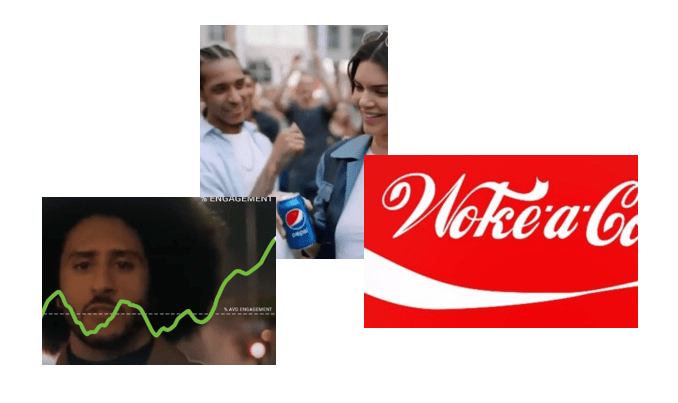
Pepsi and Kendall Jenner: In 2017, Pepsi released an ad featuring Kendall Jenner that was widely criticized for trivializing the Black Lives Matter movement. The ad depicted Jenner handing a can of Pepsi to a police officer during a protest, seemingly resolving the tensions between the protesters and the police. The ad was criticized for its tone-deafness and for trivializing the very real issues that the Black Lives Matter movement was addressing.
Nike and Colin Kaepernick: In 2018, Nike released an ad featuring former NFL player Colin Kaepernick, who had become a controversial figure for his protest against police brutality and racial inequality by kneeling during the national anthem before games. While the ad was praised by many for its support of Kaepernick’s activism, it also faced backlash from some who disagreed with Kaepernick’s stance and felt that Nike was being opportunistic by using a controversial figure to promote its brand.
Amazon and LGBTQ+ Rights: In 2019, Amazon faced criticism from LGBTQ+ activists after it announced plans to open a new office in Virginia, a state that did not have laws protecting LGBTQ+ individuals from discrimination. While Amazon had previously supported LGBTQ+ rights and had received high marks from LGBTQ+ advocacy groups for its inclusive policies, the decision to open a new office in a state without protections was seen as hypocritical by some.
PAST EXAMPLES
These are just some of the more recent high-profile examples of trying to tie your product into a social agenda that attempts to serve the causes, but ultimately gets called out for its corporatization that fails the smell test. And it’s not a relatively new phenomenon, as multiple corporations show up in the past.
Exxon Valdez oil spill: In 1989, the Exxon Valdez oil tanker ran aground in Prince William Sound, Alaska, spilling more than 11 million gallons of crude oil into the ocean. The spill was one of the worst environmental disasters in history, and Exxon faced widespread criticism for its role in the disaster. Critics argued that the company had prioritized profits over environmental safety and had failed to adequately prepare for and respond to the spill.
Nike sweatshop scandal: In the 1990s, Nike faced criticism for its labor practices in factories overseas, particularly in countries such as Indonesia and Vietnam. Activists accused the company of exploiting workers by paying low wages, providing poor working conditions, and using child labor. The scandal tarnished Nike’s reputation and led to a public outcry, as well as calls for boycotts and protests against the company.
Nestle and infant formula: In the 1980s, Nestle faced criticism for its aggressive marketing of infant formula in developing countries, which was seen as exploitative and harmful to the health of infants. Critics argued that the company was encouraging mothers to formula-feed their babies instead of breastfeeding, which was more expensive and often led to health problems. The controversy led to calls for boycotts and protests against Nestle, and the company eventually changed its marketing practices.
FUTURE OF CORPORATE MARKETING
We will most likely continue to see this type of behavior from companies as long as it’s marketing. Corporate social agendas are quickly sniffed out, as they were back in the 1960’s when the Madison Avenue advertising attempted to capitalize on the revolutions on the peace and love movement. The other problem we often see is the tie in like a Kendall Jenner or even an entire organization such as the NBA to preach hypocrisy. We have to recognize these pitfalls and be aware of them before we make the investment or throw or hard-earned dollars to their products.



 The Daily Think
Leave a comment