It seems lately, when we have a positive opinion or a feeling about something, we are presented with an opposing viewpoint that evokes a response from us. For example, someone could like the music of R Kelly without knowing his criminal activities and that initial feeling of joy is replaced with guilt for having liked something that a “bad” person created. So what if the content of their creations is the negative aspect, as opposed to the creator of the content? The film Vertigo, beloved by every auteur and director since its release in 1958 has ranked in the top 10 Films of all time, and is widely praised for its innovations, haunting score, and unique storytelling, can be looked at with a very different eye in 2023.
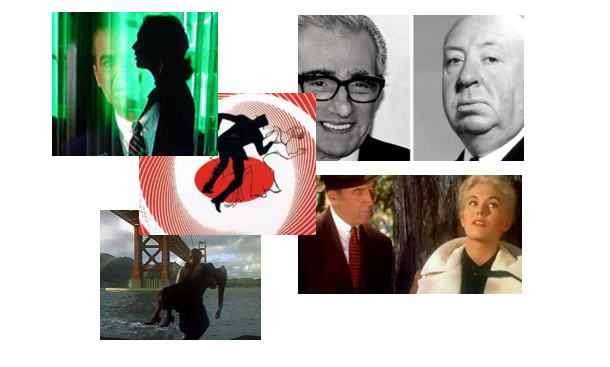
I first saw Vertigo in 1998 after going on a deep dive of film appreciation in college. I was blown away by the ending, which will not be spoiled here, but was groundbreaking to me as I considered the films of the 50’s. Then, after further research, finding out about the techniques used in the film.
PRAISE AND FLOWERS FOR HITCH
At its core, “Vertigo” is a film about obsession, with its protagonist, Scottie (played by James Stewart), becoming fixated on a woman named Madeleine (played by Kim Novak). Through its use of color, camera movement, and music, the film creates a sense of unease and disorientation that mirrors Scottie’s psychological state. The film’s famous “dolly zoom” shot, where the camera moves forward while zooming out, creates a feeling of vertigo, hence the title of the film. This shot has been used in countless films since, including “Jaws” and “Goodfellas,” and has become a staple of the cinematic language.
“Vertigo is a film that showcases Hitchcock’s genius as a storyteller. It’s a true classic.” – Francis Ford Coppola
Beyond its visual innovations, “Vertigo” is also notable for its use of sound. The film’s score, composed by Bernard Herrmann, is an integral part of the storytelling, with its haunting melodies and use of leitmotif adding depth and complexity to the characters and their relationships. The use of music in this way would become a hallmark of Hitchcock’s films and a major influence on later filmmakers.
“Vertigo is the ultimate Hitchcock film. It has it all: suspense, romance, and a haunting sense of mystery.” – Martin Scorsese
Another important aspect of “Vertigo” is its exploration of themes such as identity, memory, and the power of the gaze. These themes continue to resonate with audiences today and have been explored in countless films since, such as Christopher Nolan’s “Memento” and Darren Aronofsky’s “Black Swan.” The film’s commentary on the male gaze and the objectification of women has also been the subject of much analysis and debate.
“Vertigo is a film that explores the depths of the human psyche in a way that few films have ever done. It’s a true masterpiece.” – Darren Aronofsky
Overall, “Vertigo” is a film that continues to be studied and admired by filmmakers today. Its innovative use of visual and auditory techniques, exploration of complex themes, and psychological depth have made it a timeless classic that will continue to influence cinema for generations to come.
SO WHATS THE PROBLEMATIC HERE?
While “Vertigo” is a groundbreaking and influential film, it is also important to note that it contains elements that are dark, psychologically disturbing, and sexually perverse. One of the most notable elements of the film is its portrayal of obsession and the objectification of women. The protagonist, Scottie, becomes fixated on the character of Madeleine, who he is hired to follow. As the film progresses, his obsession with her becomes increasingly sexualized and perverse, with him dressing her up in the clothes of a deceased ancestor and forcing her to change her appearance to fit his idealized image of her. This objectification and manipulation of women is a disturbing aspect of the film that can be seen as a commentary on the male gaze and the objectification of women in society.
In addition to its portrayal of obsession and objectification, the film also contains scenes of sexual assault and violence. In one scene, Scottie forces himself on Madeleine, kissing her without her consent, and in another scene, he violently shakes her. These scenes are uncomfortable to watch and highlight the darker aspects of the characters and their relationships. Finally, the film’s ending, which involves a shocking revelation and a twist, has been interpreted by some as disturbing and even misogynistic. Without giving away the ending, it is worth noting that it has been the subject of much debate and analysis over the years. Overall, while “Vertigo” is undoubtedly a masterpiece of cinema, it is also a film that contains elements of darkness and sexual perversion that should be taken into account when analyzing its themes and impact.
VIEW THE FILM THROUGH TODAY’S LENS
Even with that said, and considering what you are in for as you sit and watch the movie, it’s just important to note what to expect. Twenty five years ago, I would not have considered the negative actions of objectification, assault, and subtle hints of necrophilia when I watched Vertigo. But considering the world we live in, we need to have empathy and be aware of the world we live in before we give praise or endorsement.
With that said, watch Vertigo, if you’re a fan of San Francisco, classic movies, and O’Henry twists!

 The Daily Think
Leave a comment