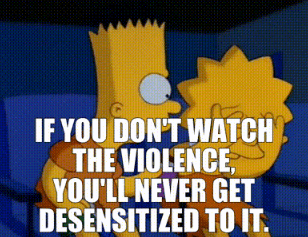
You ever have that friend, or family member who just looked at you, or heard you speak and just knew you weren’t right or were in pain? Have you ever looked at someone who was publicly embarrassed or shamed and could feel their emotion in the air and in your own body? That feeling is empathy, when someone is able to understand and share the feelings of another. It’s a powerful thing Empathy, it can make you a better friend, family member, co-worker, leader, teammate, it’s just one of those qualities that makes you an all-around winner. But, (there’s always a but) why does it feel like there is an erosion of empathy in America happening as we speak? Why does humanity feel like it doesn’t care about itself or each other more so than ever before? If Empathy is so great and beneficial an emotion, why does it feel like we are declining and having less of it when we should have more of it in these trying and loaded times?

The erosion of empathy, particularly in the context of social media, is a complex issue with multiple layers. Looking into it deeper, social media might contribute to a decline in empathetic responses in 8 key ways:
- Reduced Face-to-Face Interaction
Social media often replaces face-to-face interactions, which are crucial for developing and maintaining empathy. In face-to-face communication, we pick up on non-verbal cues like facial expressions, tone of voice, and body language, all of which help us understand and share in others’ feelings. Social media interactions are usually text-based and lack these non-verbal elements, making it harder to gauge and respond to emotions accurately. - Decreased Emotional Investment
On social media, interactions can be more superficial. For example, people might “like” or comment on a post without truly engaging with the content or understanding the context. This can lead to a more shallow emotional connection where individuals are less invested in others’ experiences and struggles, diminishing empathetic responses. - Echo Chambers and Polarization
Social media algorithms often create echo chambers by showing users content that aligns with their existing beliefs and interests. This can lead to increased polarization and a reduced understanding of opposing viewpoints. When people are not exposed to diverse perspectives, they may find it harder to empathize with those who have different experiences or beliefs. - Anonymity and Reduced Accountability
Anonymity on social media can embolden people to say things they wouldn’t say in person, sometimes leading to harsh or insensitive comments. This environment can erode empathetic behavior because individuals may feel less accountable for their actions and more inclined to engage in negative or dismissive interactions. - Comparison and Envy
Social media often highlights curated, idealized versions of people’s lives. This can lead to unhealthy comparisons and feelings of envy or inadequacy. Instead of fostering empathy, these feelings can cause users to become more self-focused and less concerned with others’ well-being. - Information Overload
The sheer volume of information and the fast pace of social media can lead to empathy fatigue. Constant exposure to distressing news and personal struggles can overwhelm individuals, making it difficult for them to respond empathetically to every situation they encounter online. - Miscommunication and Misinterpretation
Text-based communication is more prone to misinterpretation. Without vocal inflections or facial expressions, messages can be read in unintended ways, leading to misunderstandings and conflicts. This can create a cycle of negative interactions and reduce overall empathy. - Desensitization
Repeated exposure to emotionally charged or negative content can lead to desensitization. Over time, individuals might become less responsive to emotional cues and less likely to empathize with others’ experiences.

WHAT CAN BE DONE TO FIX THIS?
To mitigate the decline of empathy due to social media, individuals and platforms can take steps such as:
Encouraging more meaningful interactions: Engaging in deeper conversations and providing support rather than just quick likes or shares. Can we get better at cultivating and growing an online post or story or Tweet, versus the current method of post it and forget it.
Promoting digital literacy: Educating users about the impacts of social media and how to navigate it empathetically. We are long overdue for this, but achievement in this is harder than we think.
Fostering diverse perspectives: Actively seeking out and engaging with a variety of viewpoints to broaden understanding and empathy. Shed the assumptions that go with a label and just discuss the subject and learn true debate not Ad Hominem attacks.
Creating awareness about empathy fatigue: Recognizing when constant exposure to distressing content is affecting one’s ability to empathize. We all need to be reminded that we once cared for each other, our society and the communities we lived in.
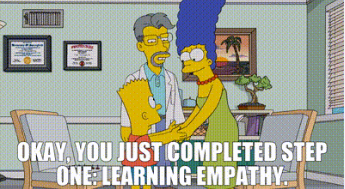
EMPATHY’S FINAL SCORE
Addressing these issues above would be a step into the right direction, but the truth is we need to start with ourselves and within our own minds and make empathy a contagious and super-spreader of an emotion. Until then, we are bound to further fall into a cycle where we lose our empathy for others and once that happens, is our care for our own well-being be next to erode?



 The Daily Think
Leave a comment