
We’ve seen Ex Machina, and we’ve all come across enough interviews and Podcasts to know that there is word that seems to be popping up often, and that word is Singularity. What is this word they speak so often about, what does it mean, and is it more than just AI related? When we deep dive into the actual word, you realize it’s more than just a buzz word thrown around by thinkers like Ray Kurzweil and more than beyond AI. The concept of a singularity is a powerful metaphor used to describe points of radical change or transformation, where existing systems and frameworks are disrupted or rendered obsolete by unprecedented developments. It is often associated with technological advancements, particularly the AI singularity, but the idea of a singularity can be applied across various fields, such as economics, social dynamics, science, and ethics. In this essay, we will explore the definition of singularity, examine various types of singularities that could occur in the future, and discuss how singularities beyond AI can reshape our understanding of the world.
Defining Singularity
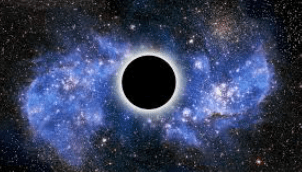
In its most basic form, the term singularity originates from mathematics and physics, where it describes a point at which a function or phenomenon reaches an infinite value or behaves in an unpredictable manner. For example, in the context of physics, a singularity refers to a point, such as the center of a black hole, where gravitational forces become infinitely strong, and the laws of physics as we know them cease to apply.
This mathematical and scientific concept has been adapted as a metaphor in other domains, particularly in discussions about technological and social progress. A singularity, in this context, is a moment in time when a system undergoes such rapid or profound change that it fundamentally alters the nature of that system. It represents a point of discontinuity or a paradigm shift, after which existing frameworks, predictions, and understandings no longer apply. For example, the technological singularity is a hypothetical future event where AI surpasses human intelligence and leads to unpredictable technological growth, radically transforming human society.
Types of Singularities Beyond the AI Singularity
While the AI singularity is perhaps the most well-known and discussed, the concept of singularity can be applied to various other domains, each representing a critical tipping point that could transform the world. Below are some examples of singularities that could occur in the future:
- Economic Singularity
An economic singularity refers to a point at which the structure and functioning of the global economy are transformed by rapid changes in technology, resource availability, or socio-political factors. One scenario for an economic singularity could involve the advent of widespread automation and artificial intelligence in the labor market, leading to massive job displacement and the end of traditional employment as we know it.
If machines can perform most or all economic tasks, traditional economic models based on labor and employment would no longer be viable. This could result in the emergence of a new economic paradigm, such as a post-scarcity economy or automated communism, where wealth and resources are distributed based on need rather than contribution. Alternatively, it could exacerbate wealth inequality and social tensions if economic gains are not redistributed, leading to potential instability and conflict.
- Social Singularity
A social singularity occurs when societal norms, values, and structures are fundamentally altered by new technologies, cultural shifts, or large-scale social movements. For example, the widespread adoption of social media has already brought about a form of social singularity by transforming how people communicate, share information, and form relationships.
Future social singularities might involve the integration of technologies like augmented reality, brain-computer interfaces, or even AI companions, which could change how people interact, form social bonds, and perceive reality. These changes could lead to new social norms and ethical dilemmas, such as questions about privacy, identity, and the nature of human relationships.
- Environmental Singularity
An environmental singularity could be triggered by irreversible changes in the Earth’s ecosystems or climate, leading to a new state of equilibrium that is incompatible with current human societies. This might occur due to reaching critical thresholds in global warming, biodiversity loss, or resource depletion, resulting in rapid and potentially catastrophic changes to the environment.
One scenario for an environmental singularity involves the runaway effects of climate change, where feedback loops (such as melting permafrost releasing methane) accelerate global warming to a point where climate patterns become unpredictable and destabilize food production, water availability, and living conditions. Another scenario might involve technological interventions like geoengineering, which could have unintended consequences, creating new and unpredictable environmental states.
- Scientific Singularity
A scientific singularity refers to a breakthrough that fundamentally changes our understanding of reality, akin to how the discovery of quantum mechanics or the theory of relativity revolutionized physics. Such a singularity could occur if scientists discover new fundamental forces, particles, or dimensions that radically reshape our understanding of the universe.
This type of singularity would not only change scientific theories but could also have profound implications for technology, philosophy, and even spirituality. For example, the discovery of a unified theory of physics could enable new forms of energy production, space travel, or matter manipulation, leading to technologies that seem almost magical by today’s standards.
- Cultural or Artistic Singularity
A cultural or artistic singularity could occur when new forms of creative expression emerge that are entirely incomprehensible within the frameworks of traditional art, literature, or music. This could be driven by advances in AI, virtual reality, or neural interfaces, which might enable people to experience and create art in ways that bypass traditional sensory and cognitive processes.
For instance, AI-generated art that is capable of evolving in real-time based on viewer responses, or immersive VR experiences that simulate emotions and thoughts, could redefine what we consider to be art and change the role of human creativity in the process. Such a singularity could challenge our notions of originality, authorship, and artistic value.
- Ethical or Moral Singularity
An ethical or moral singularity occurs when technological or social developments lead to scenarios that current moral frameworks cannot address adequately. This might involve advancements like genetic engineering, human enhancement, or the creation of sentient AI, all of which raise new questions about rights, personhood, and the nature of ethical decision-making.
As we gain the ability to edit genes, enhance cognitive capabilities, or even merge human consciousness with machines, existing moral theories may no longer suffice. New ethical frameworks will need to be developed to address questions like: Is it ethical to enhance human intelligence if it creates a cognitive elite? Should AI systems with human-level consciousness have rights? How should society handle disparities in access to enhancement technologies?
What Singularities Have Yet to Occur?
Most of the singularities described above remain speculative and have not yet occurred. While we have seen glimpses of economic, social, and environmental tipping points, no singularity has yet led to a complete and irreversible transformation of society or the global system.
We’re Basically Screwed?
Yes. As much as we try to prepare and get ready for any massive shift in technology or culture, we find we are unprepared. Reality is we are ill equipped to handle this future, and we’re basically screwed. But, the concept of singularity is a powerful tool for understanding potential tipping points and transformations across various domains. While the AI singularity is the most commonly discussed, other types of singularities—economic, social, environmental, scientific, cultural, and ethical—pose equally profound challenges and opportunities. As we continue to develop new technologies and confront global challenges, these singularities may help us anticipate and navigate the unpredictable changes that lie ahead.



 The Daily Think
Leave a comment