Happy Festivus!

Once upon a time, the NBA was a league of giants, both in stature and presence, where every night was a gladiatorial contest of grit, determination, and willpower. Then along came Gregg Popovich, a man who, depending on who you ask, either revolutionized basketball or ruined it entirely. Yes, we’re talking about that Gregg Popovich, the San Antonio Spurs’ head coach, who had the audacity to do two unforgivable things: invent “load management” and usher in the analytics-driven era of three-point shooting. How dare he? In the December 23rd episode of the NBA Ringer Podcast with Justin, Rob and Woz, they aired their grievances that were hilarious and spectacular and to be fair I will give them credit for the modern game being ruined or advanced to its current state by one Gregg Popovich (NBA Ringer.) So, here is my take, but give their podcast a listen if you want an entertaining discussion on Festivus which allows us to air out our grievances with the people or things around us that need to be aired out.

The Crime of “Load Management”
Popovich’s first major transgression was his introduction of “load management.” Once upon a time, basketball players were supposed to drag themselves up and down the court for 82 games a season, plus playoffs, until their knees turned into dust. Rest was for the weak, or so we thought. Then Pop, in his infinite wisdom, decided that his players weren’t just robots designed to entertain us for 48 minutes a night. No, he thought they were “human beings” who might benefit from a little extra rest.
How did this madness start? In the early 2010s, Popovich began the controversial practice of resting his stars—Tim Duncan, Tony Parker, and Manu Ginóbili—during regular-season games, often against marquee opponents. He didn’t even try to hide it. He once hilariously listed Duncan as out due to being “old” on an injury report. Sure, it was funny, but what about us, Pop? What about the fans who paid good money to watch a full-strength Spurs team on a random Tuesday in Cleveland? We wanted dunks, not DNP-Rest!
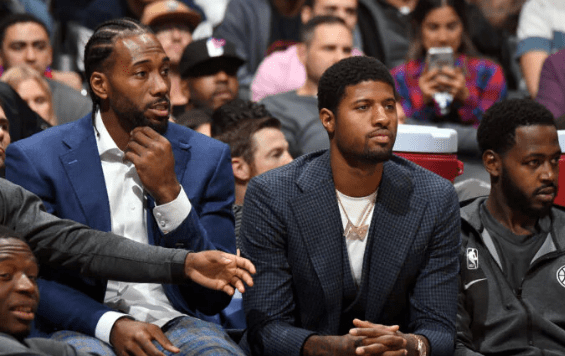
Of course, Popovich claimed this was all for the greater good. By giving his players strategic rest, they’d be fresher for the playoffs, where the games actually mattered. And wouldn’t you know it, the strategy worked. The Spurs won championships. But at what cost? The rest of the league took note, and now “load management” has become an epidemic. Superstars routinely miss games for reasons as vague as “general soreness.” Fans are left guessing which version of their favorite team will show up on any given night.
Thanks to Pop, basketball is no longer a nightly grind but an elaborate game of chess where every move is calculated. And while the players’ knees might be thanking him, the paying customers aren’t exactly thrilled. BIG WOZ WAS RIGHT!
The Three-Point Revolution: Popovich’s Second Sin
As if ruining the sanctity of the 82-game season wasn’t enough, Popovich also had the gall to pioneer a style of play that emphasized ball movement and, gasp, the three-point shot. In the early 2010s, his Spurs played a brand of basketball so beautiful it was practically art. They passed, they cut, they shot—and, most importantly, they won. The 2014 Spurs’ Finals performance against the Miami Heat was a masterclass in efficiency and unselfishness.

Unfortunately, this success didn’t go unnoticed. Other teams began to copy the Spurs’ style, and before long, the NBA was awash in analytics nerds armed with spreadsheets. They discovered a shocking truth: three points are worth more than two. The math checked out. Teams started launching threes at an unprecedented rate, and now we’re stuck in a league where centers shoot more from beyond the arc than they do in the paint. Thanks, Pop.
Once upon a time, the NBA was a ballet of post moves, mid-range jumpers, and crafty finishes at the rim. Now, it’s a three-point shooting contest masquerading as a basketball game. Gone are the days of the big man dominating in the post. Instead, we have 7-footers like Nikola Jokić and Joel Embiid tossing up triples as if they’re shooting guards. Sure, it’s exciting when Steph Curry drains a 35-footer, but do we really need everyone and their grandmother chucking threes?
Analytics Overload
Popovich’s influence also ushered in the era of analytics, where every decision is based on numbers. Coaches no longer trust their gut; they trust Excel spreadsheets. The mid-range jumper, once a staple of NBA offenses, has been all but eradicated because it’s considered “inefficient.” Never mind that Michael Jordan built his empire on mid-range shots. Never mind that Kobe Bryant’s fadeaway was a thing of beauty. If the numbers say it’s a bad shot, it’s a bad shot. Period.
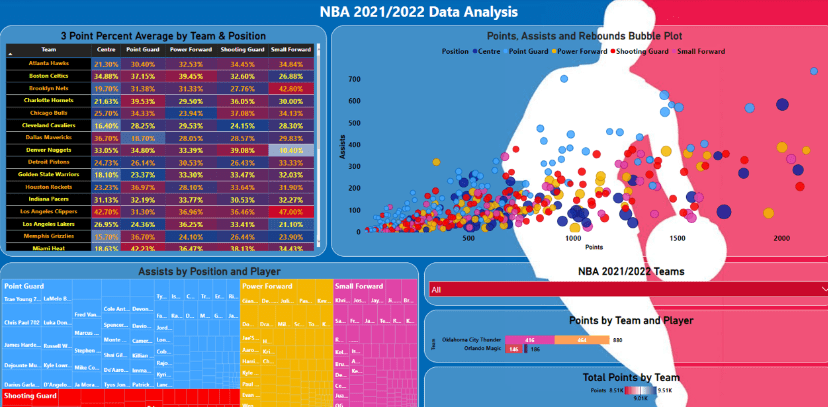
This shift has turned the game into a glorified math problem. Teams now prioritize “expected points per possession” over creativity and instinct. It’s no longer enough to play basketball; you have to play smart basketball. And while there’s something to be said for efficiency, it’s hard not to feel like some of the soul has been sucked out of the game.
The Defense Rests (Literally)
Popovich’s Spurs weren’t just offensive innovators; they were also defensive stalwarts. But even here, Pop’s influence has had unintended consequences. His teams excelled at packing the paint and forcing opponents into low-percentage shots. This defensive philosophy, combined with the rise of analytics, has led to a league where teams prioritize defending the three-point line above all else. As a result, we’ve seen the demise of physical, grind-it-out basketball. Hand-checking? Gone. Hard fouls? A thing of the past. Defense now consists of running shooters off the three-point line and hoping for the best.
A Legacy of Innovation (and Controversy)
So, did Gregg Popovich ruin the NBA? It depends on who you ask. On the one hand, he’s a five-time champion who has cemented his place as one of the greatest coaches in basketball history. His innovations have undeniably made the game more efficient and, arguably, more entertaining. On the other hand, his influence has led to a league where load management is the norm, three-pointers reign supreme, and analytics dictate every move.

But here’s the thing: Popovich didn’t do this out of malice. He wasn’t sitting in his office twirling an imaginary mustache, plotting the demise of old-school basketball. He was simply trying to win games, and in doing so, he changed the game. For better or worse, the NBA will never be the same.
A Sarcastic Thanks
So here’s to you, Coach Pop. Thanks for ruining—I mean, revolutionizing—the game of basketball. Thanks for making us care about player efficiency ratings and effective field goal percentages. Thanks for giving us a league where every team thinks it’s the Golden State Warriors, even when their roster says otherwise. And most of all, thanks for reminding us that sometimes, progress comes at a cost.

In the end, maybe it’s not Popovich we should blame. Maybe it’s us, for being so quick to embrace his innovations without considering the consequences. But hey, at least we’ll always have the highlights—even if they’re all just three-pointers.


 The Daily Think
Leave a comment