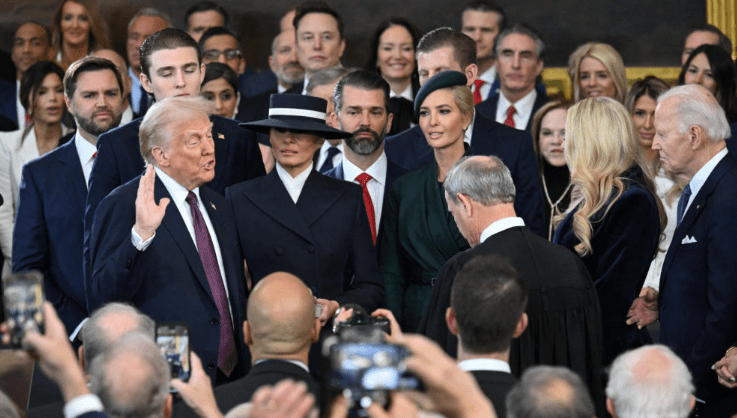
With the upcoming Inauguration, we are reminded again of what the President actually does for us. Nuclear secrets, If the United States presidency came with a job description, “selling the American Dream” would be printed right at the top in bold, italicized, size-72 font. Sure, we might expect presidents to handle trivial tasks like governing, negotiating with foreign leaders, and steering the country through crises. But let’s be honest: their real gig is convincing the rest of us that America is still the land of opportunity, innovation, and freedom—even when reality checks keep bouncing. For over two centuries, presidents have donned their best salesman hats, wielding catchy slogans, stirring speeches, and the occasional stretch of the truth to keep the American Dream alive in the hearts of the masses. Let’s take a look at how this pitch has evolved and the master class in marketing each president has contributed to this dubious tradition.
George Washington: The Original Pitchman
Ah, George Washington, the man who started it all. While Washington wasn’t exactly selling iPhones or life insurance, he sold the idea that the United States could actually function without imploding. His American Dream pitch was simple but effective: stick together, don’t let petty factions tear us apart, and, oh, avoid entangling alliances (a suggestion we promptly ignored). Washington was the silent-but-stoic type, the kind of guy whose very existence reassured Americans that this whole democracy experiment might just work. His presidency was less about dazzling sales pitches and more about being the reassuring spokesperson for a brand-new product: the United States of America.
Abraham Lincoln: The “Dream Realignment” Campaign
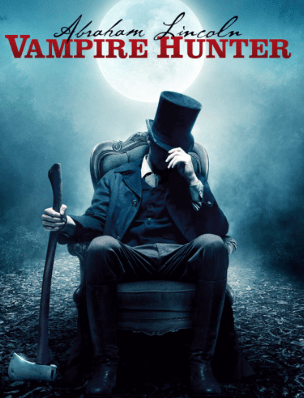
Fast-forward to Abraham Lincoln, who had the unenviable task of selling the American Dream during, you know, the Civil War. While half the country was ready to pack up their muskets and leave the union, Lincoln doubled down on the pitch. The Gettysburg Address is essentially a 272-word ad campaign for a national rebrand: “conceived in Liberty, and dedicated to the proposition that all men are created equal.” Lincoln wasn’t just selling a dream; he was trying to resell it to a fractured customer base. With a slogan like “a new birth of freedom,” Lincoln’s campaign promised a better, stronger America—assuming the North could pull off that little victory thing. And while he didn’t live to see the product launch, his pitch remains one of the most iconic in American history.
Theodore Roosevelt: The Dream Goes Rugged
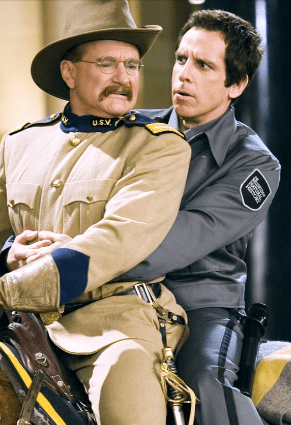
By the time Theodore Roosevelt strode into the Oval Office like a bull moose in a china shop, the American Dream had grown stale. Industrialization and urbanization had turned the once-idyllic dream into a Dickensian nightmare for many. But T.R. wasn’t about to let the dream die on his watch. His pitch? The “strenuous life.” Roosevelt didn’t just talk about pulling yourself up by your bootstraps; he’d probably hand you a pair of boots and dare you to climb a mountain. His trust-busting policies and national park initiatives sold the idea that the American Dream wasn’t just for robber barons but for the average Joe, too—as long as that Joe was ready to wrestle a bear or two.
FDR: The Dream’s Great Depression Reboot

Franklin Delano Roosevelt took the presidency at a time when the American Dream seemed more like a cruel joke. The Great Depression had millions wondering if the dream was even a thing anymore. Enter FDR, who rolled out the New Deal like it was a clearance sale on hope and recovery. Fireside chats became his infomercials, with FDR’s soothing voice assuring Americans that, yes, they could still believe in the dream—provided they backed Social Security and a little alphabet soup of agencies like the CCC and WPA. It was a masterful rebranding effort: the American Dream wasn’t dead, it just needed a government program or twelve to get back on its feet.
JFK: Ask Not What the Dream Can Do for You…
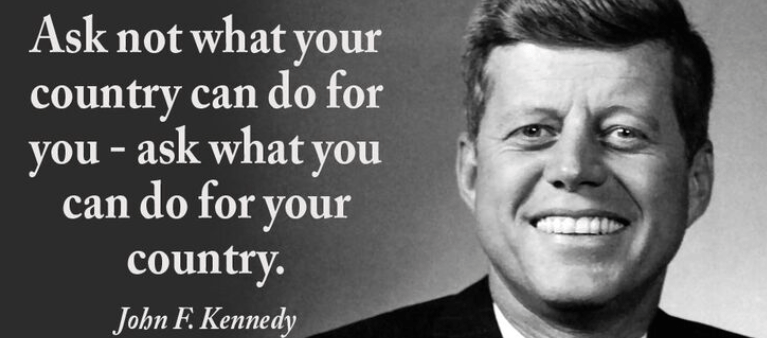
By the 1960s, the American Dream had taken on a sleek, space-age vibe. John F. Kennedy was the ultimate dream salesman, with his youth, charisma, and vision of a “New Frontier.” His famous challenge to land a man on the moon wasn’t just about space exploration; it was about selling the idea that Americans could achieve anything. “Ask not what your country can do for you, ask what you can do for your country” is basically a motivational poster in speech form. Under JFK, the American Dream was less about picket fences and more about rocket launches and the promise of a brighter future—one where we’d outpace the Soviets in the ultimate race for intergalactic bragging rights.
Ronald Reagan: Morning in America
When Ronald Reagan took office in the 1980s, the American Dream was looking a little frayed around the edges. Stagflation, gas shortages, and a general malaise had set in. But Reagan, ever the Hollywood leading man, knew how to sell a comeback story. “It’s morning again in America,” his 1984 campaign ad declared, as wholesome scenes of happy families and American flags filled the screen. Reagan sold the dream like a Ginsu knife: simple, sharp, and impossible to resist. His pitch was a return to prosperity and traditional values, all wrapped in a nostalgic glow. Whether or not his policies delivered on that promise is a matter of debate, but there’s no denying Reagan’s talent as America’s cheerleader-in-chief.
Bill Clinton: The “I Feel Your Dream” Era

In the 1990s, Bill Clinton marketed the American Dream as something personal. “I feel your pain,” he told voters, positioning himself as the relatable everyman who understood the struggles of ordinary Americans. Clinton’s pitch was about modernization: embracing globalization, technology, and the internet—all while assuring Americans that they could still make it if they worked hard and stayed adaptable. Under his presidency, the dream was sold as more inclusive and forward-looking, though critics might argue it came with a side of NAFTA and dot-com bubble risk.
Donald Trump: Make the Dream Great Again
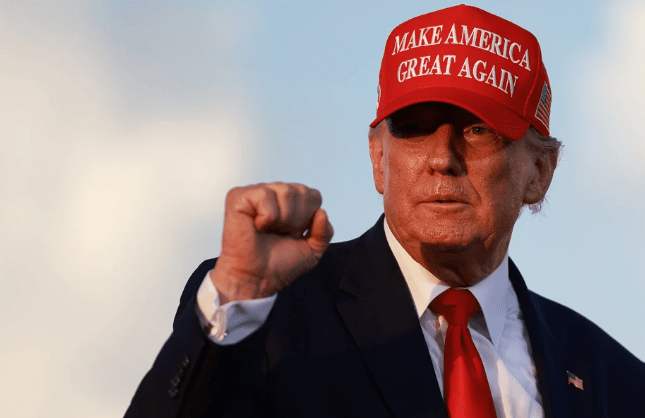
Donald Trump’s “Make America Great Again” slogan was arguably one of the most audacious American Dream pitches in recent history. Trump sold a vision of the dream that was equal parts nostalgia and defiance. To his supporters, he promised a return to a mythical golden age when jobs were plentiful, borders were secure, and America dominated the global stage. His pitch was blunt and often controversial, but it resonated with millions who felt left behind by globalization and cultural shifts. For better or worse, Trump’s presidency underscored how deeply the idea of the American Dream can divide—and unite—the nation.
The American Dream: A Never-Ending Sales Pitch
At its core, the American Dream is less a concrete promise and more a perpetually moving target. Each president has tailored their sales pitch to fit the zeitgeist of their era, playing on hopes, fears, and aspirations to keep the dream alive. But here’s the catch: the American Dream isn’t free. It’s bought with hard work, sacrifice, and often a willingness to overlook the fine print.
So, the next time a president steps up to deliver a State of the Union address or unveils a shiny new slogan, remember they’re not just governing. They’re selling. And the product? The belief that the American Dream is still within reach—even if you have to squint to see it.
 The Daily Think
Leave a comment