Once upon a time in American pop culture, the word “nerd” was a brand of exile. It was a label slapped onto kids with thick glasses, odd hobbies, and high GPAs. Being a nerd meant social banishment, a lunchtime table by yourself, and possibly a locker door in your face. But over the last few decades, something remarkable happened: the nerds fought back—and they won.
At the heart of this cultural shift are three names you probably know: Peter Parker, better known as Spider-Man; Steve Urkel from Family Matters; and Sheldon Cooper from The Big Bang Theory. These characters—who might once have been the butt of jokes—became icons, not just in spite of their nerdiness, but because of it. They represent a phenomenon we might call the Parker/Urkel/Sheldon Effect: the transformation of nerd culture from marginal to mainstream, from uncool to aspirational, and from comic relief to cultural heroes.
Let’s take a closer look at these three nerdy legends, how they flipped the script, and how their legacy continues to inspire a new generation of kids to be smart, curious, and uniquely themselves.
Peter Parker: The Original Nerd Superhero
When Stan Lee and Steve Ditko created Peter Parker in 1962, they didn’t just give Marvel Comics another superhero—they gave them a revolution. Unlike other superheroes who were adults, wealthy, and already confident in their skin (think Batman or Superman), Peter was a teenager. A nerdy teenager.
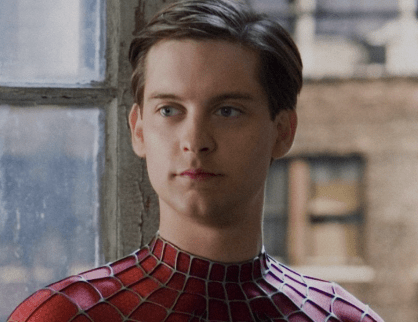
He was a science whiz, a photographer for the school paper, and socially awkward. He was bullied, broke, and hopeless with girls. But when he got bitten by that radioactive spider, his life changed—not just because he gained superpowers, but because he became relatable. He wasn’t perfect. He had homework. He worried about his Aunt May. He cracked jokes and got overwhelmed.
Peter Parker was the first major hero who made being smart look cool. He used science to solve problems. He invented his own web-shooters and tracked villains through deductive reasoning. His intelligence was as central to his identity as his superpowers.
And this was powerful. For generations of kids who didn’t fit in, Peter was a beacon. He said, “You don’t have to be the quarterback to be the hero. You just have to be kind, clever, and willing to take responsibility.”
In a world where nerds were often invisible, Peter Parker made them spectacular.
Steve Urkel: Nerdom With Swagger
Fast forward to the 1990s, and you’ll hear a voice echo through sitcom history: “Did I do that?” With oversized glasses, high-water pants, suspenders, and a voice like a kazoo with a cold, Steve Urkel burst onto screens in Family Matters—and took over.
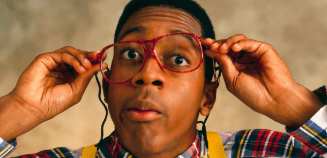
Originally intended as a one-time guest character, Urkel, played by Jaleel White, became the show’s breakout star. He was pure, undistilled nerd energy—clumsy, obsessive, and deeply uncool by every conventional measure. But somehow… he won everyone over.
Why?
Because beneath the awkwardness and the cheese obsession was a heart of gold. Steve was loyal, hardworking, honest, and unafraid to be himself, no matter how many doors Laura closed in his face. And, importantly, he was a genius. He built teleportation devices in his basement. He created transformation chambers. He was, for all intents and purposes, the nerdy Black Einstein of prime-time television.
Steve Urkel wasn’t just comic relief—he was a lovable underdog who taught kids everywhere that it’s okay to be weird, smart, and unapologetically you. He brought diversity to the nerd archetype, breaking racial and social molds. And while he may have been mocked by the characters around him, audiences adored him.
Urkel helped change the narrative. He didn’t stop being nerdy. He made nerdy unstoppable.
Sheldon Cooper: The Nerd as Rock Star
In 2007, the world was introduced to Dr. Sheldon Cooper, theoretical physicist and socially oblivious savant from The Big Bang Theory. If Peter Parker was the original nerd hero, and Steve Urkel the cultural lightning rod, Sheldon was the nerd turned rock star—unapologetically brilliant, hilariously condescending, and utterly unforgettable.
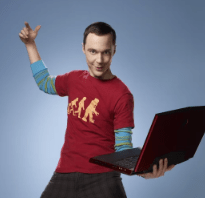
Sheldon took things to another level. He wasn’t just a science nerd—he was science. His world revolved around quantum mechanics, comic books, and ritualistic structure. He was arrogant, literal-minded, and emotionally stunted. And yet—he became one of the most beloved characters on TV.
Why?
Because Sheldon was the embodiment of intellectual passion. He was the dream version of what a nerd could become in the modern age: not just a survivor, but a thriving, celebrated, wealthy genius. While he struggled with social conventions, he didn’t want to be “normal.” He saw himself as above the fray—and audiences couldn’t get enough.
Over time, Sheldon developed emotional depth. He built friendships, fell in love (in his own quirky way), and even won a Nobel Prize. He showed that brilliance and growth can coexist. And with him at the center, The Big Bang Theory became one of the highest-rated sitcoms of all time.
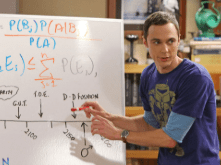
Sheldon made theoretical physics sexy. He made board games and string theory cool. He made the world see nerds not just as people to pity or laugh at, but as stars.
The Rise of Nerd Culture
The Parker/Urkel/Sheldon Effect isn’t just about these three characters. It’s about what they represent—and what they helped create.
Because of them, being smart is no longer a punchline. In the early 2000s and 2010s, we began to see a massive shift in how intelligence, science, and uniqueness were portrayed in media. Geek culture exploded:
- Comic-Con went from niche gathering to global pop culture summit.
- Marvel movies dominated box offices, turning comic nerds into cultural gatekeepers.
- STEM programs became the focus of school curricula across the globe.
- Coding bootcamps, robotics clubs, and hackathons became cooler than football practice in many schools.
Kids started dressing as Spider-Man, not just because of the suit, but because Peter Parker was one of them. They started doing Urkel impressions, not to mock, but to celebrate his uniqueness. And they quoted Sheldon not just for laughs, but because he was right—even if he was kind of a jerk about it.
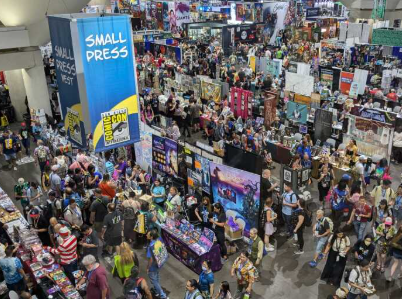
More importantly, these characters gave kids permission to be different. To not fit in. To embrace what makes them weird, smart, passionate, and real.
Embracing the Effect: What It Means Today
The Parker/Urkel/Sheldon Effect created a new model of heroism. One where the hero doesn’t have to be the strongest, or the coolest, or the smoothest talker. Instead, the hero can be the smartest. The most curious. The one who stays true to who they are.
This effect isn’t limited to TV or comics anymore—it’s seeped into the real world. Think of:
- Mark Zuckerberg, coding Facebook in a Harvard dorm room.
- Greta Thunberg, a teenage climate activist standing up to world leaders with data and conviction.
- Malala Yousafzai, whose passion for education turned her into a global icon.
Kids now grow up with role models who read, who build things, who ask questions. They’re inspired not just to be strong, but to be smart. To take pride in their knowledge. To be a little weird, and a lot themselves.
This wouldn’t have been possible without the groundwork laid by Peter, Steve, and Sheldon.
The Ongoing Power of Nerd Representation
So what makes this trio so enduring? Why do they still resonate?
Because they never stopped being who they were.
- Peter Parker never became the cool kid—even as Spider-Man, he still struggled with money, relationships, and balancing his double life. He never abandoned his nerd roots. Instead, he made them heroic.
- Steve Urkel never got a makeover to win over Laura. He didn’t stop loving polka or wearing suspenders. He doubled down on his oddness, and that’s what made him a legend.
- Sheldon Cooper didn’t soften his genius or dumb down his intellect to fit in. The world around him adapted, learned to appreciate him, and he—eventually—learned to appreciate it back.
These characters told generations of kids: “You don’t have to change to be accepted. You just have to own who you are.”
Long Live the Nerds
The Parker/Urkel/Sheldon Effect reminds us that pop culture doesn’t just reflect society—it shapes it. When we give our kids heroes who value intelligence, authenticity, and passion, we empower them to be more than what the world expects.

We live in a time when knowledge is power, curiosity is a superpower, and being different is finally celebrated. And we owe a lot of that to a wall-crawling science nerd from Queens, a cheese-loving genius from Chicago, and a theoretical physicist who made us all laugh (and Google quantum entanglement).
So here’s to the nerds—the real ones, the fictional ones, and the future ones. May their glasses stay taped, their shirts stay tucked, and their minds stay open.
Because thanks to Peter, Steve, and Sheldon, the world no longer laughs at nerds.
It stands up and cheers.
 The Daily Think
Leave a comment