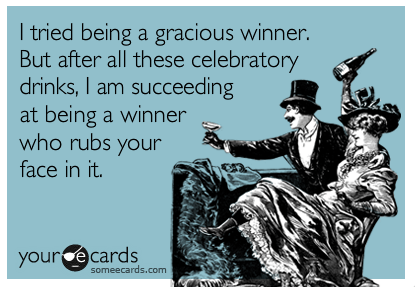
In today’s world, where victory is celebrated primarily through meme-spam, trash-talk, and the sacred ritual of replying “skill issue” to anyone suffering, the concept of a gracious winner is about as outdated as dial-up internet. Enter the Modern Gracious Winner—an iconoclast, a rebel, the last surviving member of a species long thought extinct. He shakes hands. He says “good game.” He even—brace yourself—means it. Naturally, this makes him a suspicious figure.

The Modern Gracious Winner floats through competition like some sort of soft-spoken anomaly, refusing to partake in the snark and salt that define our current cultural ecosystem. While others perform elaborate victory dances designed expressly to appear on TikTok, he commits the unforgivable sin of modesty. “I couldn’t have done it without my team,” he says, completely undermining the social expectation that he thank no one, insult everyone, and immediately release a self-glorifying montage set to overly dramatic orchestral dubstep.
He is not merely polite; he is dangerously polite. In an age where humility is often treated as a communication disorder, he dares to congratulate opponents without inserting the traditional backhanded qualifiers like “though you never really had a chance against me.” His restraint has been called “unsettling,” “unnatural,” and “possibly a cry for help.” Psychologists are baffled. Internet commenters are furious. Twitter cannot process him.
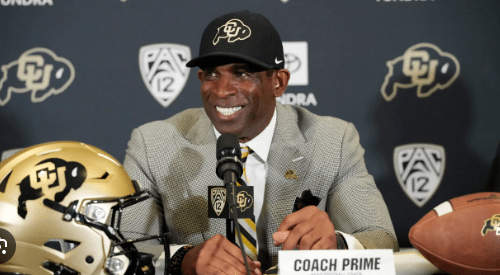
While the rest of society sharpens its wit into serrated edges, our Gracious Winner walks around unarmed—no sarcasm, no venom, not even a passive-aggressive eyebrow raise. What’s worse, he continues to succeed while doing this, which violates several unwritten laws of modern competition, particularly Law #3: “If you win, you must let everyone know they are worse than you in as many creative ways as possible.”
But the Gracious Winner is not here for pride. He is here for… sportsmanship. Yes, that dusty old word people pretend to value but haven’t deployed in the wild since 1998. He thanks referees. He applauds his opponents’ good plays. And when he wins, he does not proceed to lecture the defeated about their life choices or recommend they “retire in shame.” Instead, he offers encouragement. Encouragement! In this economy?

His behavior, while undeniably archaic, is perhaps revolutionary in its refusal to bow to the cult of cynicism. He commits social blasphemy by believing that respect is not a weakness. He thinks dignity belongs in competition. He imagines a world where triumph does not require humiliating others. How quaint. How offensive.
And so, in this satirical, hyper-ironic age where cruelty is mistaken for wit and shameless self-glorification is the highest form of expression, the Modern Gracious Winner persists. A quiet threat. A gentle insurgent. The final protestor standing in front of the advancing army of digital snark.
Some call him boring. Some call him naïve. But maybe—just maybe—he is something else.
An iconoclast.
A radical.
A rebel against sarcasm itself.
And honestly? In a culture drowning in caustic commentary…
the gracious winner might be the most subversive winner of all.

 The Daily Think
Leave a comment