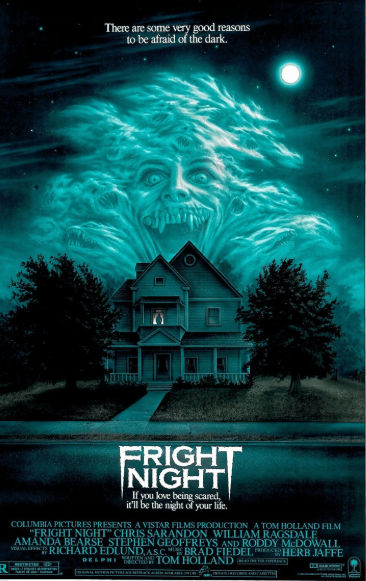
Having just finished reading the “Fright Night” comic series released in When film historians trace the fault lines of horror cinema—those seismic shifts where the genre cracks open and something new crawls out—names like Romero, Carpenter, Craven, or Hitchcock are carved into the stone. But tucked in the shadows, smiling with a half-grin and a glint of mischief, stands another figure: Tom Holland, a writer-director whose creation of Fright Night in 1985 did more than combine humor and horror. It redefined what they could be together.
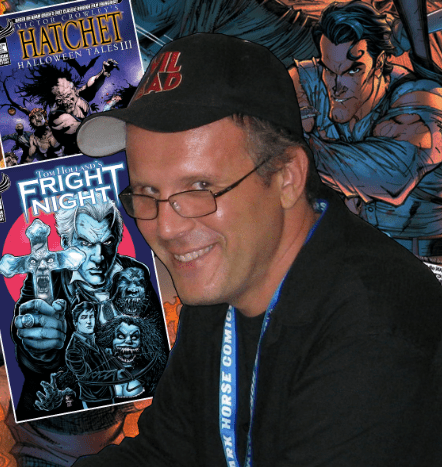
In an era where movies were forced into strict tonal lanes—funny or scary, campy or serious—Holland carved out a rebellious, electric middle ground. His film was a cinematic dare: a vampire story with real teeth, real terror, and a beating heart, but wrapped in charm, self-awareness, and wit. It was not parody, not satire, and absolutely not cynical. Holland believed horror could make you laugh without surrendering its soul.
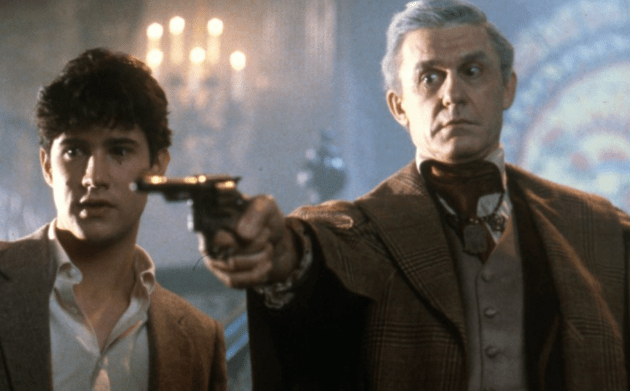
This is the story of how Tom Holland, against all odds, created a new horror hybrid. How Fright Night grew into sequels, comics, and a legacy that refuses to die. And how one filmmaker, with nothing but conviction and storytelling fire, forced the genre to evolve.
The 1980s (greatest decade): A Genre at War With Itself
To understand the importance of Fright Night, you must understand 1985.
The horror genre had split into two rival nations:
- The slashers, dominating box offices with body counts and relentless killers—Halloween, Friday the 13th, A Nightmare on Elm Street.
- The comedies, reviving Universal monsters through parody—Love at First Bite, The Munsters, endless B-movie riffs.
In Hollywood’s eyes, horror could only be profitable if it leaned into gore, while humor was relegated to camp. A film that tried to be both—truly both—was seen as confused, “market-unclear,” or doomed.
But Tom Holland wasn’t listening.
A lifelong lover of classic horror—Peter Cushing films, Hammer gothic, the 1930s golden age—Holland wanted a vampire story that respected its roots but could exist in the same world as contemporary teens. He wanted the suspense of Hitchcock, the charisma of Christopher Lee, and the reflective heart of a coming-of-age story.
He wanted to meld tones that studios believed could not coexist.
And he was going to do it anyway.
The Unlikely Origin of Fright Night
Most genre breakthroughs begin with a risk. Fright Night began with a refusal to compromise.
Holland’s concept was dangerously simple: what if a classic vampire moved into a modern suburban neighborhood, and the only person who noticed was a horror-obsessed teenage boy? The brilliance of that pitch was its duality—both frightening and funny, earnest and absurd, nostalgic and modern.
But Hollywood executives only saw problems:
- “Comedy and horror don’t mix.”
- “Vampires aren’t profitable.”
- “No one wants old-fashioned monsters.”
- “It’s too weird.”
Yet Holland kept pushing. His script was tight, character-driven, and far smarter than the market expected. Eventually, Columbia Pictures—mostly to fill a scheduling gap—greenlit the project.
What Hollywood saw as filler, Holland saw as a revolution.
An Idea That Shouldn’t Have Worked (But Did)
What makes Fright Night a landmark is not just that it’s funny or scary—it’s how it blends those elements with surgical discipline. Holland’s philosophy was simple: the humor must never deflate the horror; the horror must never crush the humor.
Every scene walks a razor’s edge.
1. A Real Vampire, Not a Joke
Chris Sarandon’s Jerry Dandrige is suave, seductive, monstrous, tragic—a true gothic creature placed in mid-80s suburbia. He’s not parody. He’s genuinely terrifying.
2. Real Fear in a Teen Hero
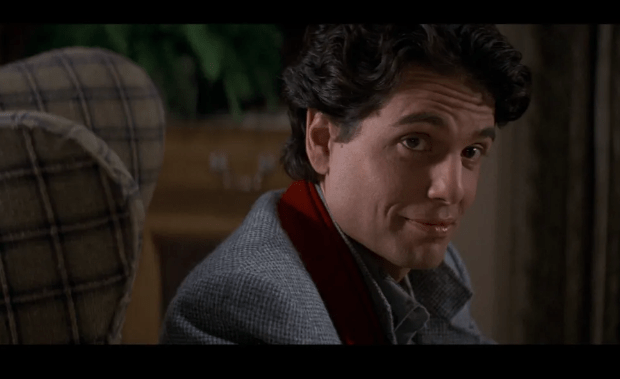
William Ragsdale’s Charley Brewster is not a winking audience surrogate. He is sincerely scared, sincerely determined, and genuinely in over his head.
3. Humor as Character, Not Escape
Roddy McDowall’s Peter Vincent is comedic not because he mocks the genre—but because he loves it. His fear, bravado, and redemption give the film emotional texture.
Holland was proving something: horror could be fun without becoming farce. It could be playful without betraying itself. It could be classic without being dusty.
He wasn’t mocking horror. He was resurrecting it.
The Film Nobody Expected to Work—That Became a Hit
Upon release, Fright Night shocked critics and audiences:
- It opened strong at the box office.
- It became the second-highest grossing horror film of 1985.
- Critics praised its intelligence, heart, and innovation.
- Fans embraced its hybrid tone.
Against all studio predictions, Tom Holland’s rebellion paid off. His film wasn’t a fluke—it was a blueprint.
And it spawned a movement: the rise of the horror-comedy that still takes itself seriously.
The Sequel: Fright Night Part 2 and the Expanding Mythology
Though Holland didn’t direct the 1988 sequel, his fingerprints were everywhere. Fright Night Part 2 continued his tonal legacy—mixing mood, darkness, style, and humor—but added new villains, new lore, and a deeper exploration of the world he created.
The sequel expanded the universe by:
- Introducing Regine, a powerful and vengeful vampire antagonist.
- Evolving Peter Vincent’s arc from frightened host to seasoned hunter.
- Deepening Charley’s trauma from the first film.
- Continuing the franchise’s emphasis on character-driven story, not just effects or gore.
While the film’s release was hampered by distribution issues and behind-the-scenes tragedies, it eventually became a cult classic—proof that the world Holland created had legs.
The Comics: Keeping the Night Alive
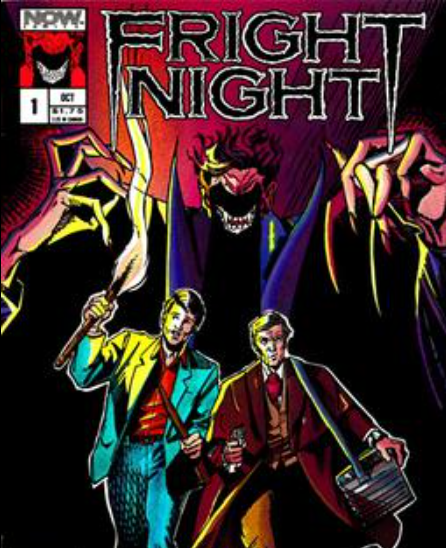
As Hollywood moved through trends, Fright Night found new life in comic book form. The comics took Holland’s universe and exploded it outward:
- More monsters
- More lore
- More mythic takes on the Brewster/Vincent relationship
- More expansive villains
- Bold experimentation with tone, imagery, and monster mythology
The comics embraced what Holland started: a world where terror and humor coexist, not as rivals but as allies. And because comics were not bound by studio budgets or executive mandates, they pushed the lore into wild and imaginative territory.
The Long-Term Legacy: A Genre Forever Changed
It is easy to underestimate the long tail of Fright Night, but the fingerprints of Holland’s creation are everywhere. His film helped shape an entire generation of hybrid horror storytellers.
His influence can be seen in:
- Scream (self-aware but still frightening)
- Shaun of the Dead (humor that never betrays the horror)
- The Lost Boys (stylish youth-focused vampire mythology)
- Buffy the Vampire Slayer (horror, comedy, and teen drama woven together)
- What We Do in the Shadows (loving homage to monster lore)
- Supernatural and other genre-mixing TV series
- Countless indie horror-comedies
Tom Holland proved the impossible: that you could honor classic horror without being trapped by it. That you could make audiences laugh without stripping monsters of their menace. That tone could be fluid, hybrid, unexpected—and still emotionally grounded.
He didn’t just create a movie. He created a movement.
A Legacy Written in Darkness and Laughter
Nearly four decades later, the legacy of Fright Night refuses to fade.
- New collectors’ editions release regularly.
- New analysis appears on YouTube, film journals, and podcasts.
- The franchise has been preserved through comics, fan fiction, academic essays, and documentaries.
- Horror fans continue to discover it through streaming and rediscover it through rewatches.
- Modern filmmakers cite it as a direct inspiration.
Why does it endure?
Because Tom Holland tapped into a universal truth:
Fear and humor are siblings.
Both come from tension.
Both release emotion.
Both make us feel alive.
And when a filmmaker respects both equally, something timeless is born.
 The Daily Think
Leave a comment