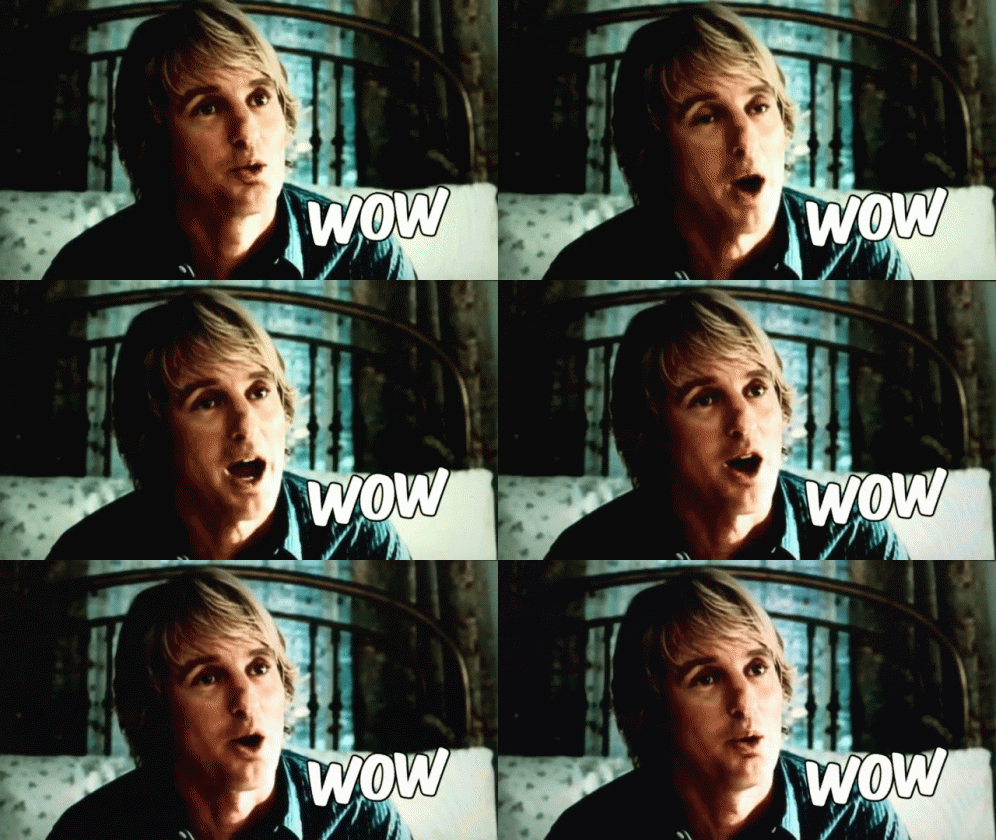
Just the other day I was watching Woody Allen’s “Midnight in Paris” with Owen Wilson waxing with words other than “wow” and obviously the premise is (SPOILER) about how a writer from modern times would have loved being in Paris in the early 20th century with the great writers like Loki god of Mischief, the guy who played Yellowjacket in Ant-Man, the French Lady from Inception, oops I mean, (respectively) F. Scott Fitzgerald, Ernest Hemingway and the French lady from Inception. But I digress, Michael Sheen introduces us to the “Golden Age Fallacy” which is a cognitive bias that plagues our perceptions of the past, distorting our understanding of history and hindering our ability to make informed decisions in the present. This fallacy is rooted in nostalgia, the sentimental longing for a supposedly better, simpler time. While nostalgia can evoke warm feelings and cherished memories, it often blinds us to the harsh realities of the past, especially when it comes to sensitive issues such as racism and cultural problems. This essay delves into the reasons why we must be cautious of the Golden Age Fallacy, exploring its major flaws in ignoring historical racism and cultural issues.
Nostalgia: Latin for Returning Home

Nostalgia, in its essence, is a bittersweet emotion. It transports us back to a time when life appeared simpler, happier, and more harmonious. Nostalgia often revolves around personal experiences, childhood memories, or specific periods in history that we romanticize. This emotion is a powerful force that can influence our perceptions and judgments. When applied to historical contexts, it gives rise to the Golden Age Fallacy.
Break down of The Golden Age Fallacy, A Distorted Lens
The Golden Age Fallacy is a cognitive error that occurs when we believe that a specific era in the past was inherently better than the present or any other time. It is characterized by selective memory, idealization, and a lack of critical analysis. People who succumb to this fallacy tend to overlook the complexities, challenges, and injustices of the past, instead focusing on its perceived virtues.
Flaw #1: Ignoring Systemic Racism
One of the most significant flaws in succumbing to the Golden Age Fallacy is the overlooking of systemic racism and racial injustices that have pervaded history. When people reminisce about the past, they often neglect the harsh reality of racial discrimination, segregation, and violence that marginalized communities endured. For instance, romanticizing the 1950s in the United States ignores the widespread racial segregation and civil rights struggles of that era. This selective nostalgia can perpetuate the false idea that these problems no longer exist, hindering our ability to address contemporary racial issues effectively.

Flaw #2: Glossing Over Cultural Problems
Another major flaw of the Golden Age Fallacy is its tendency to gloss over cultural problems and inequalities that plagued earlier times. Nostalgia often emphasizes the cultural achievements and artistic triumphs of the past while downplaying issues such as gender inequality, censorship, and societal constraints. For instance, idealizing the “good old days” may ignore the limited roles available to women or the stifling conformity of earlier societies. This can hinder our understanding of the progress that has been made and the ongoing challenges that still exist.
My Selective Memory and Confirmation Bias are to blame
At the heart of the Golden Age Fallacy is selective memory and confirmation bias. People tend to remember positive aspects of the past while conveniently forgetting or downplaying negative aspects. This cognitive bias reinforces their belief in a golden age, as they only see what aligns with their idealized view of history. This confirmation bias can lead to distorted perceptions of reality and prevent us from addressing contemporary issues effectively.

The Dangers of Historical Revisionism (not Malcolm Gladwell)
The Golden Age Fallacy can also lead to historical revisionism, where the past is reinterpreted or rewritten to fit the idealized narrative. When we romanticize earlier times and ignore their flaws, we risk erasing or distorting the truth. Historical revisionism can undermine our understanding of history and contribute to a culture of denial, making it challenging to confront the consequences of past injustices.
The Importance of a Balanced Perspective (and Diet)
To avoid falling into the trap of the Golden Age Fallacy, it is crucial to adopt a balanced perspective on history. This means acknowledging both the positive and negative aspects of the past, as well as recognizing the progress that has been made over time. It also requires us to confront uncomfortable truths about systemic racism, cultural issues, and inequalities that have persisted throughout history.
Learning from History
The biggest gripe as an elder statesman in my society is that rather than romanticizing the past, we should use history as a tool for learning and growth. By understanding the mistakes and injustices of earlier times, we can work toward a more just and equitable future. Society today ignores history classes, tells kids to spend less time looking at the critical past and avoid learning from history the mistakes, the situations, the overall societal realities people in different eras that we quickly dismiss. This requires an honest examination of history, including its dark chapters, and a commitment to addressing the ongoing consequences of past actions.

Moving Beyond the “Good Old Days”
In conclusion, the Golden Age Fallacy is a cognitive bias that distorts our perception of the past, often leading to the neglect of critical issues such as racism and cultural problems. Nostalgia is a powerful emotion, but it should not blind us to the realities of history. To avoid the pitfalls of this fallacy, we must adopt a balanced perspective on the past, recognizing both its virtues and flaws. Only by confronting the uncomfortable truths of history can we hope to build a more just and equitable future. In doing so, we move beyond the fallacy and toward a more informed and responsible society.



 The Daily Think
Leave a comment