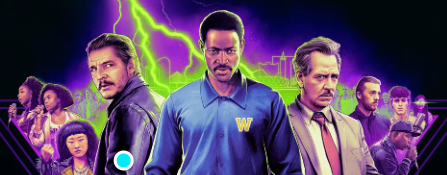
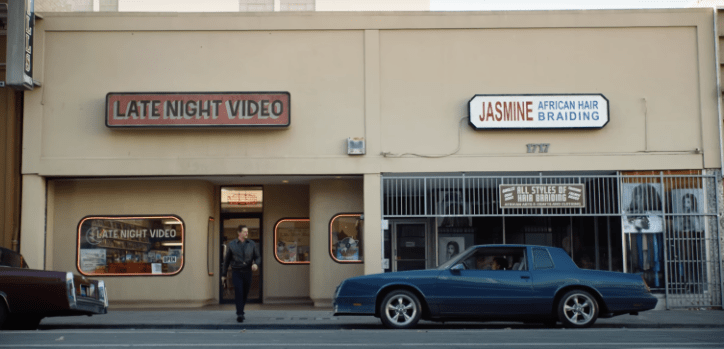
- Four interwoven chapters—much like distinct comic arcs—unfold in 1987 Oakland. Each vignette spotlights a different “hero”: punks, rappers, hitmen, and an NBA star, all connected by a surreal green energy.
- The directors, Anna Boden and Ryan Fleck (from Half Nelson and Captain Marvel), craft structure reminiscent of Marvel’s overlapping solo-character narratives—yet grounded, gritty, and nonlinear.
- Instead of CGI capes, Freaky Tales uses VHS-style textures, neon-pulp visual flair, and theatrical violence, marrying indie-film authenticity with blockbuster ambition.
Marvel actors (and Marvel DNA) in an Oakland setting

Although not featuring superheroes in spandex, Freaky Tales benefits from a Marvel-caliber cast:
- Pedro Pascal, renowned as Din Djarin (The Mandalorian) and Joel (The Last of Us), steps into Clint—a stoic hitman with a secret soft spot—channeling the duality of Marvel heroes with charisma and depth ew.com.
- Dominique Thorne, known to fans as Riri Williams (Ironheart), co-leads the rap duo Danger Zone with Normani—injecting youthful strength and emotional stakes.
- Ben Mendelsohn, a beloved Marvel character actor (Captain Marvel), plays “The Guy,” an unpredictable corrupt cop whose menace elevates every chapter.
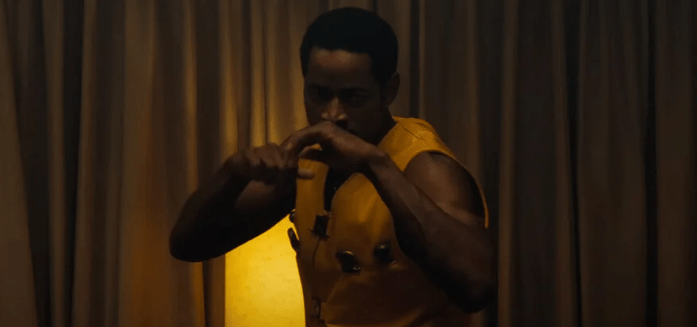
- Jay Ellis, from Top Gun: Maverick, becomes Sleepy Floyd—a fictional NBA avenger whose katana-wielding bloodbath deserves its own comic book one-shot.
These performances bring Marvel-like gravitas, reinforcing the notion that Freaky Tales could’ve been the universe-wide crossover pulse in Marvel’s cinematic heart.
Chapters as comic-book arcs
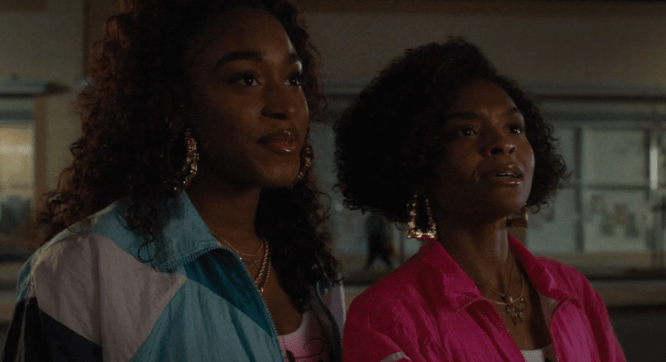
Familiar-punch Marvel fans will recognize the echo of comic construct in each chapter:
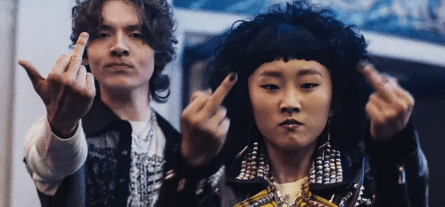
- The Gilman Strikes Back – punk community vs neoliberal skinheads; the chapter reads like a X-Men vs. Sentinels tale, with the punks uniting through green‑light‑powered rage.
- Don’t Fight the Feeling – a rap-duo origin story fueled by friendship and defiance; beats and rhymes become their superpower under the mysterious glow.
- Born to Mack – Clint’s mafia-escape arc, loaded with the “one last job” trope; elevates with emotional stakes when tragedy strikes, pushing him toward redemption.
- The Legend of Sleepy Floyd – reboots the real athlete into a martial-arts vigilante, comic-book panel to celluloid; over-the-top gore fits the superhero origin mold
The McGuffin green light becomes the connecting “Infinity Stone,” the Psytopics cult and neon glow lending metaphysical unity. Unlike Marvel’s fixed canon, Freaky Tales embraces ambiguity—comic mysticism without explanatory resolve.
Soundtrack supremacy: Raphael Saadiq out‑Marvels Marvel
Marvel’s films often rely on licensed music (notably Guardians of the Galaxy), but Freaky Tales raises the bar with a soul-infused, vibrant score by Raphael Saadiq:
- Original score: Saadiq (from Tony! Toni! Toné!) delivers synth-funk, hip-hop, and punk elements that enhance narrative momentum latimes.com.
- Needle drops: spike-era nostalgia with Public Image Ltd., Sly & The Family Stone, Metallica, and Too $hort himself—grounding action in cultural reality.
- Emotional resonance: the punk chapter’s catharsis, the rap chapter’s rallying heartbeat, the Clint setup’s melancholy, and Floyd’s cathartic climax are each lifted by Saadiq’s dynamic cues—something Marvel’s utilitarian scores rarely achieve on this level.
- Even Guardians aside, Marvel’s musical identity remains franchise-brand driven. Freaky Tales, by contrast, treats music—not just action—as the emotional backbone. In Oakland, music is the city’s power source.
Why Marvel wishes they’d made Freaky Tales
Several aspects of this indie anthology overtly eclipse typical Marvel output:
| Feature | Freaky Tales | Typical Marvel Movie |
|---|---|---|
| Ensemble depth | Four distinct leads, layered arcs | 1–2 main heroes, supporting cast |
| Emotional grit | Punks fighting oppression, rap triumph, crime, familial loss | Cosmic-scale stakes, less interpersonal angst |
| Visual style | VHS‑grain, neon‑punk, blood-soaked comic energy | Glossy CGI-driven photoreal style |
| Mystical aura | Green energy, unexplained but felt | Power broadcasts explained by lore |
| Music as character | Integral—Saadiq’s score & era tracks drive story | Often incidental or brand-advert style |
Marvel’s dominance in blockbuster entertainment is unquestioned—but when it comes to emotional texture, visceral indie-style action, and soundtrack integration that drives story, Freaky Tales simply outpaces them.
Critical & fan love
- Entertainment Weekly gave it a B+, praising performances, grounded roots, and nostalgic thrill
- Critics frequently likened its hyper-stylized violence and dirty energy to Tarantino, Pulp Fiction, or Kill Bill, emphasizing its indie–mainstream hybrid nature .
- Roger Ebert applauded the emotional heft, comparing Pascal’s arc to a superhero origin without the capes .
- Oakland fans endorsed it via Reddit, citing Bay‑area authenticity, cameos, music, and community pride .
Final take: the Marvel they can’t make—but Freaky Tales DID
Freaky Tales is the Marvel movie that Marvel can’t and wishes it could make: bold, personal, unexplainably heartfelt, and tonally boundless. It bypasses franchise rigidity, unites characters in anthology form (no Phase 1–6 required), and lets music, grit, and supernatural style take the lead.
Its Marvel-adjacent nodes—supernatural origin, ensemble arcs, action set-pieces—are present. But it’s the raw human emotion, punk defiance, and musical soul (courtesy of Raphael Saadiq) that deliver what Marvel often only hints at.
Marvel fans and music lovers take note: Freaky Tales isn’t just another comic-color Gauntlet—it’s a whole new paradigm. Gritty. Gloriously bloody. Soul-powered. Because in Oakland, the freaky tales are the superpower.



Leave a Reply